
Most people don’t plan on becoming bird people. It usually starts with something small — a parrot at a friend’s place that says your name back to you, or a flash of yellow at a backyard feeder you barely glanced at. Then you look it up. Then you look up what it eats. Then it’s two hours later and you’re reading about cage sizing.
That pull is real, and it makes sense. Birds are behaviorally complex, visually striking, and genuinely varied in ways that other animals aren’t. A budgerigar bird and a wild gray catbird share a taxonomic class and almost nothing else. A sun conure bird and a backyard goldfinch both have vivid yellow coloring and completely different relationships to humans. The range is part of what makes the subject worth paying attention to.
This blog covers pet birds and wild birds — practically, honestly, without overselling any of it. Here’s a map of the territory.
The Parrots People Encounter First
Conure birds are responsible for a disproportionate share of people’s first real parrot experience. They’re medium-small, confident, and impossible to ignore once they’ve decided you’re interesting. They climb on you uninvited, investigate your food, and make their preferences about where they sit known without any ambiguity. For a lot of people, that’s the moment parrots go from “interesting animal” to “something I actually want to live with.”
Within the conure family, the green cheek bird and the sun conure bird represent two different answers to the same question. The green cheek is playful and affectionate without the volume — it suits apartments and households where noise is a real constraint. The sun conure is louder, more visually dramatic (vivid orange and yellow plumage that looks impractical, like a bird designed by someone who wanted to make a point), and correspondingly more intense as a daily companion. Both are good birds. They don’t suit the same household.
The quaker bird — also called the monk parakeet — is worth flagging for a reason most introductory articles skip: it’s the only parrot species that builds stick nests rather than nesting in cavities, which produces a distinctively busy, constructive personality in captivity. Quakers talk well, bond closely, and are genuinely entertaining to live with. They’re also regulated or outright banned in several US states because feral populations have established themselves and some states treat them as an agricultural risk. Check local law before you buy one. This isn’t a technicality — people have had birds confiscated.
Conures and quakers are where many people should start with parrots — real personality and real talking ability at a size and noise level most households can manage.
The Birds That Ask More of You
African grey parrots have accumulated a reputation that holds up under scrutiny. Dr. Irene Pepperberg’s research with an African grey named Alex — conducted across decades at Harvard and Brandeis — demonstrated vocabulary use, object categorization, and numerical reasoning that genuinely complicated what scientists thought they knew about avian cognition. The last words Alex said to Pepperberg the evening before he died were “You be good. I love you.” That detail follows the species around because it says something true about what these birds are capable of.
What the reputation doesn’t always communicate is how emotionally sensitive african grey parrots are. They track household routines. They notice when things change. An under-stimulated or under-connected grey develops behavioral problems — feather destruction, anxiety responses, repetitive movement — that take significant time and patience to walk back. They’re not difficult birds. They’re sensitive ones, and that distinction matters for anyone thinking seriously about ownership.
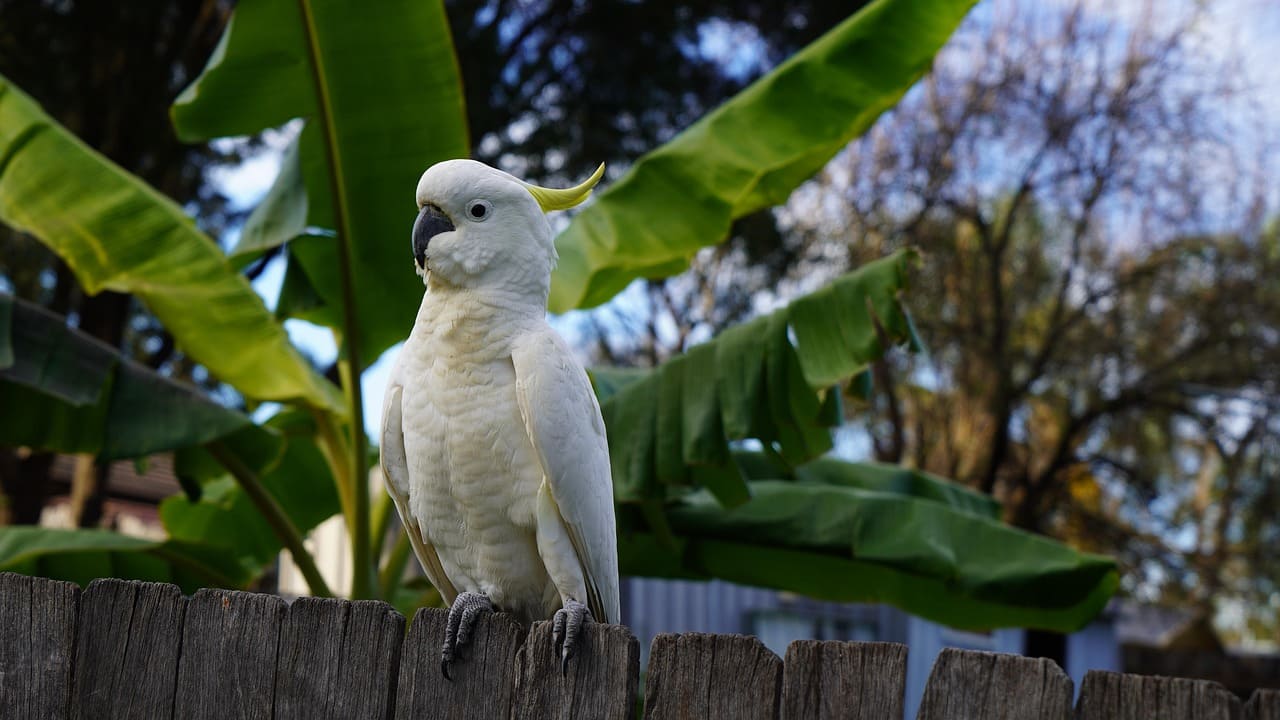
The cockatoo bird is the other species in this tier, and it comes with a similar warning label written in large font. Cockatoos bond intensely, are emotionally demonstrative in ways most parrot owners find remarkable, and have social needs that passive proximity doesn’t meet. A cockatoo left in a cage while its owner works from the next room is not a cockatoo that’s receiving adequate interaction. The birds that end up in rescues — and cockatoo rescues have long waiting lists — are almost never problem birds. They’re birds that outpaced their owners’ preparation.
Both species reward experienced, committed owners with relationships that are genuinely unlike anything else. Both deserve more than good intentions from first-time buyers.
The Birds That Work for Most People
The budgerigar bird is the most popular pet parrot in the world, and the margin isn’t close. The reasons are practical: budgies are small, adaptable, genuinely social, and capable of learning words and phrases at a rate that surprises owners who expected something more decorative. A well-kept budgerigar lives 8 to 12 years, sometimes longer — a real commitment, but one that fits most living situations without significant restructuring.
The cockatiel sits just above the budgerigar in size and needs slightly more daily contact, but delivers something the budgie doesn’t quite match: a shoulder-perching calm and a quality of whistling that owners routinely describe as the best part of their day. Avian vets recommend cockatiels as first parrots more often than any other species, and that consistency is worth paying attention to. It reflects a real match between what cockatiels need and what most people can reasonably provide.
Budgerigars and cockatiels aren’t the species people choose when they can’t get what they really wanted. They’re the species experienced bird keepers frequently come back to because they’re genuinely good at being companions.
Wild Birds Are Their Own Reward
Sarah put up a single backyard feeder during a quiet winter with no particular goal beyond having something to look at. Within a week she had regulars she couldn’t identify. She bought a field guide. Then a better one. Three years later she leads weekend birding walks for her local Audubon chapter and has logged over 200 species. She still maintains the feeder.
That progression is common enough to be a pattern. Wild bird watching has a low barrier to entry — a window, a feeder, twenty minutes — and a ceiling that goes as high as you want to take it.
Finches birds are a reliable starting point. They’re small and active, visually distinct enough for beginners to start identifying without specialist equipment, and present in most North American backyards year-round or seasonally. Watching finch behavior at a feeder — the hierarchy, the display calls, the way dominant birds position themselves — is more layered than it looks until you start paying attention.
Cat birds are worth looking for along woodland edges and hedgerows in spring and summer. The gray catbird is a skilled mimic that assembles its own songs from fragments of other species’ calls — a long, seemingly improvised sequence that sounds different every time because it essentially is. The mewing call it’s named for is a descending note that stops people mid-step when they hear it without context. Once you know what it is, you start hearing it everywhere.
Wild bird watching and pet bird keeping inform each other more than most people expect. Parrot owners who start paying attention to wild birds become sharper observers of their own animals. Backyard birders who learn about parrot cognition start seeing behavior differently in the field. The crossover is real and genuinely makes both hobbies more interesting.
What You’ll Find Here
This blog is written for people who take birds seriously — whether that means a cockatiel on your shoulder most evenings, a decade of experience with african grey parrots, or a feeder you check before you leave for work.
Care guides that don’t smooth over the difficult parts. Species profiles that tell you what ownership actually involves, not just what makes a bird appealing in a pet store. Honest takes on diet, lifespan, behavioral needs, and the decisions that matter for long-term welfare.
Birds are worth understanding properly. That’s what this is for.